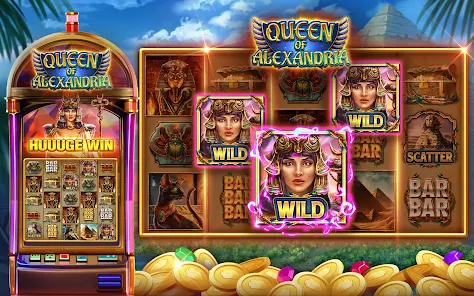





Beyond the flashing lights and digital displays, the enduring appeal of the slot lies in the complex way it interacts with the human brain. While modern machines are marvels of software engineering, their true power is psychological. Understanding why we are drawn to the “spin” reveals a lot about human behavior and the science of rewards.
Variable Ratio Reinforcement
At the heart of every slot machine is a concept from behavioral psychology called Variable Ratio Reinforcement. In simple terms, this means that rewards are delivered after an unpredictable number of responses.
Unlike a vending machine, where you know exactly what you’ll get after a specific action, a slot keeps the “payoff” a mystery. This unpredictability creates a much stronger habit than a consistent reward would. It’s the same mechanism that keeps people scrolling through social media feeds: the next “spin” (or scroll) might be the big one.
The “Zone” and Flow State
Many regular players describe entering a state of total immersion, often referred to as “The Machine Zone.” This is a form of “flow state” where the outside world fades away, and the player’s focus is entirely narrowed down to the rhythm of the game.
To facilitate this, developers focus on:
- Ergonomics: Modern cabinets are designed for long-term comfort.
- Continuous Play: Features like “auto-play” or rapid-fire buttons remove any friction between the player and the action.
- Rhythmic Soundscapes: The background music in modern slots is often designed to be ambient and non-intrusive, keeping the brain in a relaxed but focused state.
The “Losses Disguised as Wins” (LDWs)
One of the most clever innovations in modern multi-line slots is the LDW. Imagine you bet $1.00 on a spin across 20 different lines. The reels stop, the machine plays a celebratory sound, and you “win” $0.40.
Technically, you lost $0.60, but the brain processes the lights and sounds as a victory. Research using skin conductance and heart rate monitors shows that players react to these “wins” almost as strongly as they do to actual profits. This keeps the dopamine flowing even when the bankroll is technically shrinking.
The Illusion of Control
Human beings naturally look for patterns, even where none exist. This leads to the “Illusion of Control,” where players believe their actions—such as how hard they press the button or the time of day they play—can influence the RNG.
While we know mathematically that every spin is an independent event determined by a $1/0$ logic gate, the physical interaction with the machine provides a sense of agency. Features like “Stop” buttons (which don’t actually change the outcome but stop the animation faster) are designed specifically to cater to this psychological need.
Conclusion
The modern slot is a masterpiece of multidisciplinary design, combining mathematics, digital art, and behavioral science. It doesn’t just offer a game of chance; it offers a highly tuned sensory experience designed to provide a brief escape from reality. As technology advances into augmented reality and biometric feedback, the “spin” will likely become even more personalized, continuing its reign as the most popular form of gaming on the planet.